In boorloo, the 2025 Emerging Architect Prize Tour came to a close with Emily Duncan of Woods Bagot Perth offering a talk about finding balance between labour and expertise, between empathy extended to users and empathy extended to the people doing the work. Emily led the Metronet project, a $1.65 billion metro line with five new stations, and spoke about what it takes to hold a design narrative clearly enough that every stakeholder — from builder to community member — understands the intent and can make decisions in service of it. Her two strategies for sustaining a healthy studio were mentorship and psychological safety: the recognition that architecture is built on criticism, but criticism without empathy stifles the very creativity the profession depends on. She spoke about industry retention through parenthood, and about expecting her first child in two weeks and how her future will be still about finding the balance and figuring it out in real time. It felt like a fitting note to end on. Across every single state on this tour, parenthood has surfaced as a theme the profession is circling but hasn't yet resolved. So has the question of how to extend to our own workplaces the same care and attentiveness we aspire to bring to the people we design for.
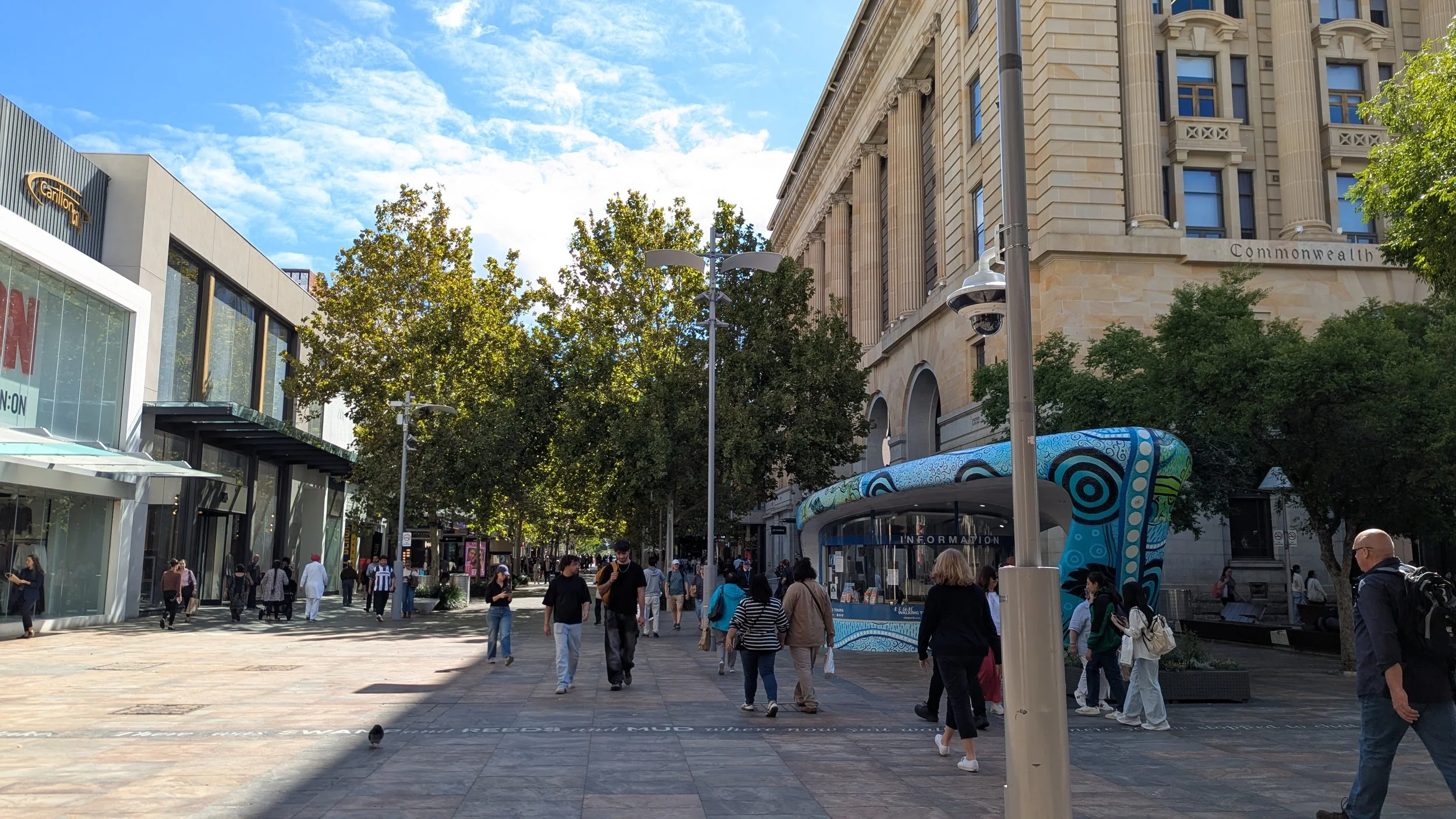
Photograph of Murray Street Mall in Perth by Kali
The Q&A in Perth was searching and generous. We were asked questions about how to balance listening with the urgency of housing delivery, about what slum renewal reveals about whose way of life is being valued and whose is being erased, and about how to give back without doing harm. A thread that ran through all of it was reciprocity: building processes where people with lived experience are genuine partners, paid for their time, not consulted as a courtesy. The conversation on psychological safety landed somewhere close to lessons I shared from Donna Haraway that extremes leave us without agency: an overly critical culture crushes creative risk, but a profession that offers no honest feedback leaves graduates unable to grow. Emily put it simply: it takes practice, and she is still learning. After a month of conversations across eight cities, that felt like an honest and hopeful note to end on.
"When we feel safe, we take creative risks. When criticism is guided by empathy, it fuels growth." — Emily Duncan
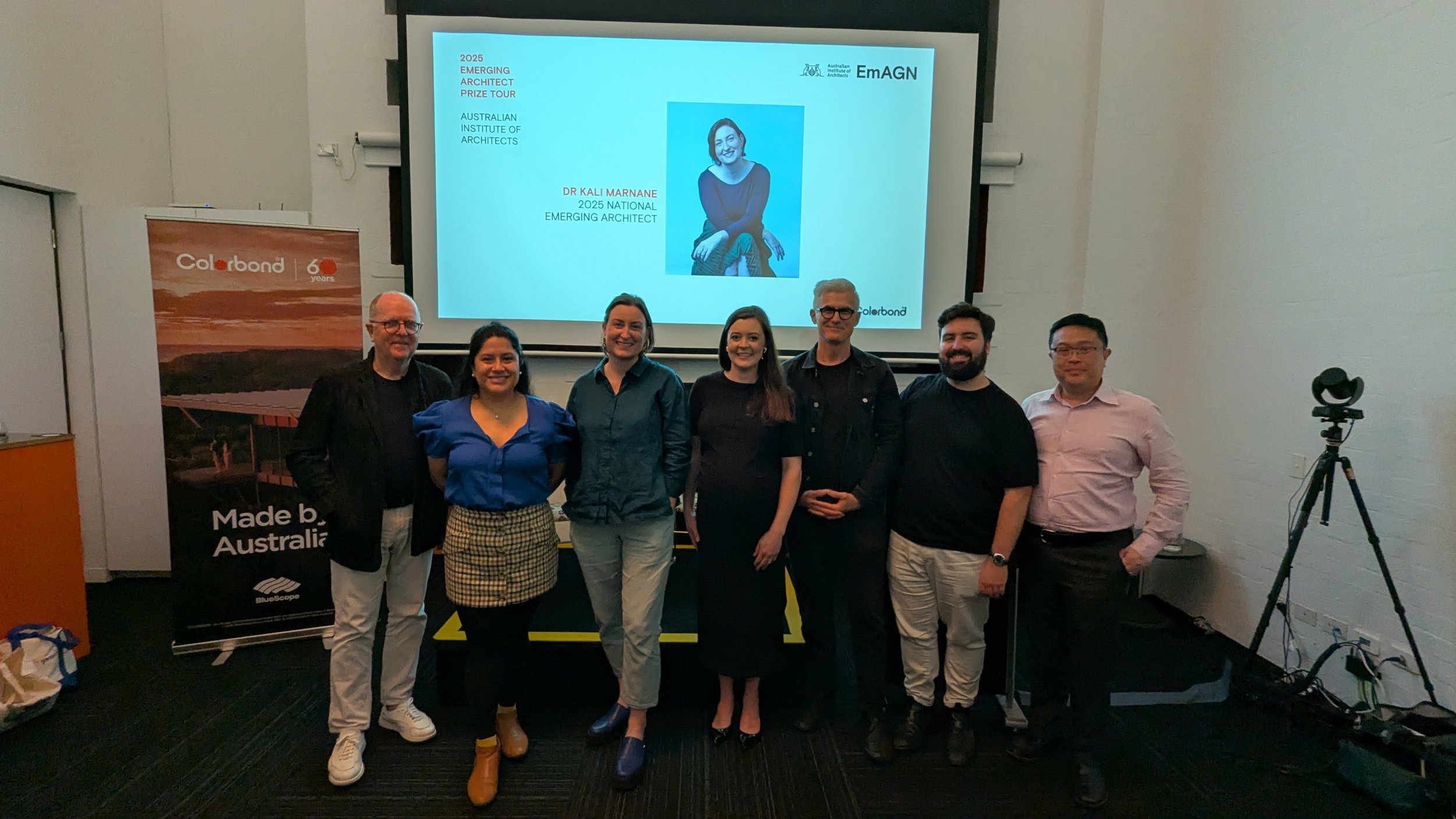
Ross Donaldson (AIA WA Chapter President), Stephanie Alama Chavez (EmAGN WA Co-Chair), Kali Marnane (2025 EAP National Winner), Emily Duncan (2025 EAP WA Winner), Jonathan Speer (AIA WA Chapter Executive Director), Marco Da Trindade (EmAGN WA Co-Chair), and Ian Thow (Bluescope specification manager)